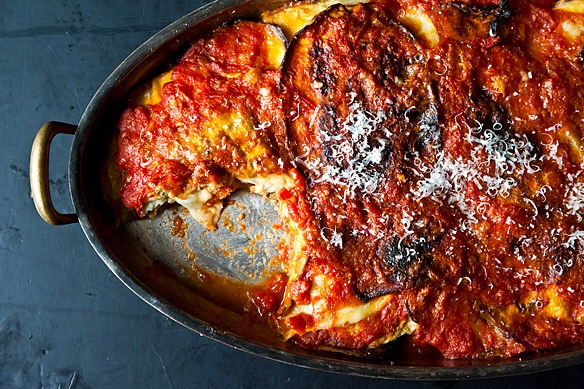
Eggplant Parmessan casserole is a favorite cold weather dish I think. Layers of
homemade tomato sauce, eggplant, and melty cheese always hit the spot
when I’m craving vegetarian comfort food. This recipe uses fresh
mozzarella cheese for extra creaminess along with scattering bread
crumbs on top right before baking to get a crispy topping.
I started out by preparing my ingredients. Drain your whole peeled
tomatoes from two 28-ounce cans and set them aside. Finely chop your
onions. I like to cut them in half vertically and remove the peels.
Place the onion cut side down, holding down on one end, cut 1/4-inch
slits horizontally down the onion while leaving the side you’re holding
intact. Then cut the onion vertically, it should fall apart in even
cubes. It’s by far my favorite easy way to cut onions.
Another simple trick for mincing garlic is to use a Microplane grater if
you have one. I like to grate the garlic directly into the bowl or even
straight into a hot oiled pan when I’m cooking. This is fast and
requires fewer dishes to wash.
I didn’t come across small eggplants at the market so I used larger
ones instead. If you’re using large eggplant, slice them horizontally
into 1/2-inch thick medallions. I like to save the larger slices for the
bottom layers and use the smaller, prettier ones to layer on top.
Let the tomato sauce simmer and cook your eggplant in batches until golden.
Once your sauce and eggplant is prepared, you can go ahead to the fun
step, which is layering. I spread a layer of tomato sauce on the
bottom, followed by the eggplant and thyme (instead of basil). Then top
with torn, fresh mozzarella and Parmigiano-Reggiano. After repeating
this layering twice, finish the top with panko crumbs. Over the years,
I’ve started using panko crumbs over regular bread crumbs since I find
that the texture is lighter and crunchier and perfect for dishes like
this.
Place into the oven and let it bake through for 45 minutes until the
top is golden and brown. This casserole is sure to please all picky
eaters. If you have leftovers, try spooning them over a crisp piece of
toast for lunch the next day.
Eggplant Parmesan
Serves: 8 Prep Time: 1 hour 30 mins Total Time: 3 hours
3 tablespoons extra-virgin olive oil, plus about 2 cups for frying
1 onion, finely chopped
3 garlic cloves, very finely chopped
2 28-ounce cans whole, peeled Italian tomatoes, drained
Kosher salt and freshly ground pepper
8 small eggplants (or 2-3 large), cut lengthwise 1/2-inch thick ( 4 pounds total)
3 tablespoons coarsely chopped basil
1 pound lightly salted fresh mozzarella, thinly sliced and torn into small pieces
1 cup freshly grated Parmigiano-Reggiano cheese
3 tablespoons dry bread crumbs or panko
HOW TO MAKE:
1. In a large skillet, heat the 3 tablespoons of olive oil.
Add the onion and garlic and cook over medium heat until tender, about 5
minutes. Using your hands, crush the whole tomatoes into the skillet.
Bring to a simmer and cook over medium-low heat, stirring occasionally,
until the sauce is very thick, about 25 minutes. Transfer the tomato
sauce to a food processor and puree until smooth. Season with salt and pepper.
2. Meanwhile, in a very large skillet, heat 1/4 inch of olive oil.
Season the eggplant slices with salt and pepper. Working in several
batches, cook the eggplant over medium-high heat, turning once, until
golden on both sides, about 8 minutes per batch. Add more olive oil to
the skillet between batches. Drain the eggplant slices on paper towels.
3. Preheat the oven to 400 degrees F. Spread 1 cup of the tomato sauce in a 9-x-13-inch glass or ceramic baking dish. Arrange one-third of the fried eggplant slices in the baking dish
and sprinkle all over with 1 tablespoon of the chopped basil. Top with
one-third of the torn mozzarella and sprinkle with 1/3 cup of the grated
Parmigiano-Reggiano. Repeat this layering twice. Sprinkle the panko
crumbs all over the top of the eggplant Parmesan. Bake in the upper
third of the oven for about 45 minutes, until the top of the eggplant
Parmesan is golden and the tomato sauce is bubbling. Let stand for 15
minutes before serving.
voila.. you have your own eggplant parmessan, habe fun cooking folks..
Sunday, March 15, 2015
Bizarre Food Scams That Could Only Happen In China
PLASTIC RICE.
If there’s one food that should be impossible to counterfeit, it
would be rice. But the Chinese did it anyway. China’s fake rice is also
called plastic rice. It’s made from potatoes, sweet potatoes, and
synthetic resin molded into the shape of real rice. The faux rice was
commonly sold in Chinese markets, especially in Taiyuan in Shaanxi
Province. The rice remained as hard as stone even after it was cooked
and did not digest easily. It’s also pretty dangerous, since consuming
three bowls of it is equal to consuming one bag of vinyl, orone plastic bag.
Aside from producing artificial rice, dishonest Chinese rice sellers
also add flavors to ordinary rice and sell them to the unsuspecting
public as “Wuchang rice,”
which is more costly and generally considered one of the better brands
of rice sold in Chinese markets. Only 800,000 tons of this Wuchang rice
are produced annually, while about 10 million tons are sold. In other
words, more than 9 million tons are fake.
CHEMICAL TOFU. Tofu, also called soya curd, is a cheese-like food made from a mixture
of soy milk and a coagulant. Chinese authorities recently closed down
two factories in Wuhan, Hubei Province for selling fake tofu, which was
made by mixing various chemicals together. One worker confessed
that they combined soy protein with flour, monosodium glutamate,
pigment, and ice to make the fake tofu before packaging it and selling
it under the name of another company that was producing real tofu.
Using soy protein to make tofu isn’t the most dastardly of deeds, but
not all the schemes were so innocent. Another criminal gang made
counterfeit tofu by adding rongalite, an industrial bleaching agent
that’s been linked to cancer.
Supposedly, the chemical made their tofu chewier and brighter. The
syndicate was headed by three cousins who sold about 100 tons of the
tainted product to the unsuspecting public. When police raided their
factory, they found employees making the counterfeit food with grimy,
unwashed equipment.
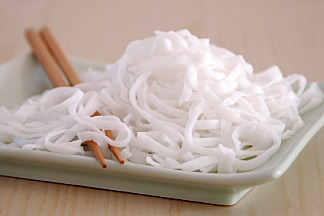
ROTTEN RICE NOODLES
China’s counterfeit rice noodles are made from rotten, stale, and
moldy grains which are usually used as animal feed. These are then mixed
with cancer-causing additives such as sulfur dioxide to get the final
product. And this isn’t a one-man show—almost 50 factories in Dongguan
city were found to be in on the scheme, churning out 500,000 kilograms
(1.1 million lb) of counterfeited rice noodles per day. Another
inspection of 35 other factories showed that 30 of them were producing
substandard rice noodles. Producers bleached spoiled rice and mixed it with additives to get triple the amount of rice noodles.
Aside from using stale rice, some producers use flour, starch, and
corn powders instead. These noodles usually have a very low protein
content—as low as 1 percent compared to 7 percent for pure rice noodles
and 4.5 percent for mixed rice noodles. Some pigs that were fed these
fake rice noodles ended up with weak limbs and several other problems.
I think thats it for now. what do you think guys ? let me know in the comment bellow.
I'm gonna share more about fact food and recipe. till then, bye.
ps: share it if you want :)
Friday, March 6, 2015
10 Weird And Untold Facts About Milk
Milk is one of the most popular and important beverages on
the planet. We drink it when we’re babies, and when we get older, we use
it in everything from ice cream to coffee. In fact, we drink it so
often that most people probably take it for granted. So let’s take a
step back and give milk a fresh, new look because this white liquid is
really, really weird.
10Cownnibalism
Here’s an icky question. If you saw a cow eating another cow, would you
drink its milk? The next time you go to the grocery store, you might
want to mull that over for a bit because that milk you’re about to buy
probably came from a cannibal.
Dairy farmers need cheap ways to keep cows healthy, happy, and
squirting out milk. To fill up those jugs, bovines need a lot of energy.
That’s where rendered fat
enters the equation. Rendering plants take dead animals and turn those
corpses into tallow. Around half of that fat is added into animal feed.
So when Bessie starts chowing on her daily dose of grain, she’s probably
eating her cousin.
This sounds like something out of a futuristic horror movie, but cow
cannibalism isn’t really that big a deal. It is if you’re feeding them
ground-up protein, which can cause mad cow disease, but rendered fat is
totally fine. In fact, it’s a lot better than most vegetarian options.
Tallow is easier on a cow’s digestive tract than foods like sunflower
seeds, increases fertility, and helps cows take milk production up a
notch. And if you were to replace animal fat with grain, you’d need
three million acres of corn to make up the difference. That would surely
affect grocery bills.
So while cows eating cows is a pretty odd thought, perhaps we should just relax and enjoy a nice glass of cannibal milk.
9Cows Enjoy Listening To Slow Jams (Maybe)
The next time you buy a jug of milk, you might want to thank Lou Reed.
According to a 2001 study by researchers at the University of Leicester,
the Lou Reed song “Perfect Day” puts cows in the mood to make milk.
Songs with less than 100 beats per minute can increase milk
production by 3 percent. Scientists think these magic melodies relax the
animals, letting them produce milk in higher quantities.
Other slow tunes that seem to work are “Bridge over Troubled Water”
by Simon and Garfunkel, “What a Difference a Day Makes” by Aretha
Franklin, and “Everybody Hurts” by R.E.M.
However, this all depends on whom you ask. While the people at
Leicester stand by their study, the folks at Canada’s Department of
Agriculture and Agri-Food are skeptical.
According to the Canadians, no one has repeated these experiments
since 2001, which is a bit troubling. Also, if the music actually has an
effect, it probably has nothing to do with the songs themselves.
Instead, the music likely drowns out all the disconcerting sounds coming from those milking machines.
But hey, if you’ve got a couple of cows, it probably wouldn’t hurt to play “Moon River” by Danny Williams, just in case.
8Skim Milk And Creamy Fabric
Once upon a time, nobody drank skim milk. A byproduct of the
butter-making process, skim milk was treated like garbage and dumped
into rivers along with buttermilk and whey. In the 1920s, Wisconsin
dairy plants were pouring over 18,000 kilograms (40,000 lb) of these
untreated milk products into the state’s waterways annually, and things were getting smelly.
Facing pressure to stop stinking up the countryside (and stop being
wasteful to boot), dairy companies started coming up with new uses for
skim milk. In the 1940s, they sold it dried to the Allies, and in the
1950s, companies claimed skim milk could help you lose weight. Suddenly,
it was a supermarket staple. But perhaps the most interesting use for
skim milk had to do with the protein casein.
In the 1930s, scientists in Italy and America extracted casein from
skim milk, turned it into fiber, and used it in all sorts of projects.
Need to upholster car seats? Casein can do that. Want to make a fake fur
hat? Casein to the rescue! In fact, people thought casein was going to
be the next big thing in fashion, but interest in creamy clothing began
to wane in the late 1940s.
However, in the last few years, casein has become fashionable again
thanks to German designer Anke Domaske. Founder of fashion label
Mademoiselle Chi Chi, Domaske has taken skim milk clothing to the next
level. In 2011, she invented a new fiber called QMilch,
or QMilk. QMilch is far more eco-friendly than the casein products of
the 1930s and ‘40s. It’s made of milk unfit for human consumption, and
Domaske’s process excludes the dangerous chemicals normally associated
with textile production.
The casein is taken from dried milk, and then it’s set inside a
machine that chops it. Next, it’s heated and then spun into thin yarn.
Once the fiber is finished, it’s ready for Domaske to use in her new
designs. And don’t worry. You can totally wash it, and it won’t go sour. It’s also easy on the skin, which is good news for people who are allergic to cotton.
7Boys And Girls Get Different Milk
You’ve probably noticed by now, but men and women are different,
biologically. Our bone structure is pretty distinct, the plumbing is all
different, and unless gynecologists get their hands on some Arnold
Schwarzenegger science, men won’t be giving birth anytime soon. And
that’s not all. Women live longer than men, guys are better at handling
sleep deprivation, and ladies are pretty amazing when it comes to spotting colors.
We also get different milk as babies.
In a study done on rhesus macaques, a mother’s milk changed depending
on whether she gave birth to a male or female. If Momma Macaque had a
boy, her milk would contain 35 percent more fat
than if she’d had a girl, and it would be loaded down with proteins.
That’s probably because young male monkeys are more active and need that
extra energy. But if Momma Macaque had a daughter, her milk would be
high in calcium to give that girl strong bones. In addition to the extra
minerals, female monkeys drink higher quantities of milk than males,
and over time, their fat intake eventually equals their brothers’.
Animals besides macaques make different milk. Cows, gray seals, and
red deer do it, too—and so do humans. Scientists from Michigan State
University ran tests on 72 Kenyan women and found that they produce
fattier milk for boys than for girls. Other differences are even
weirder. For example, they found that poor mothers produce creamy milk for their girls,
but well-to-do mothers from Massachusetts produce milk with more energy
for boys. So not only is human milk different for boys and girls, it
also seems to change based on social circumstances.
While multiple theories explain why mothers produce different kinds
of milk, scientists have yet to figure it all out. Many researchers
think this discovery should influence the way companies produce milk
formula for infants. Those early days of milk-drinking have a lasting
effect on the way kids develop, and scientists suggest that businesses
should adapt their products to suit different sexes.
6Most People Can’t Digest Milk
Pour yourself a bowl of cereal, and take a couple of bites. If you can
eat the whole thing without coming down with diarrhea, congratulations!
You’re a mutant.
While many of us take milk-drinking for granted, 60 percent of adults
on Earth just can’t handle the white stuff. When most humans stop
drinking their mother’s milk, they stop producing lactase, the enzyme
that digests the key sugar in milk. Without a steady supply of lactase,
you become lactose intolerant, and if you take a gulp of milk, you’ll
end up with cramps, bloating, or nausea.
The other 40 percent, many of whom come from Europe, Africa, and India,
are genetic anomalies. Thanks to an ancient mutation, their bodies
still produce lactase, and that’s why they can drink milk after
babyhood. Scientists believe this milk mutation popped up around 10,000 B.C., near present-day Turkey.
No one is sure why this milk-friendly gene showed up or how it spread
so quickly through Europe. For a while, researchers thought ancient
Europeans lacked sunlight and adapted new ways of processing vitamin D.
Others think the gene showed up as a way of supplementing European
diets, so people could drink milk when crops died. Others suggest it was
a way of making women fatter and thus more fertile.
Scientists have a better idea of how Africans developed their milk-drinking mutant powers. While only about 25 percent
of people of African descent can digest lactose, scientists think this
ability has to do with the problem of drinking water. Originally,
African farmers had to drink out of ponds or rivers, and that was
incredibly risky thanks to germs. So Africans eventually developed the
ability to process milk and thus avoid horrible diseases.
While the US government has strict policies on fluids like blood and
semen, breast milk is treated as a food. That means you can sell it to
whomever you want, however you want. A lot of mothers donate their extra
milk to nonprofit banks that pasteurize it and sell it to hospitals for
$130 per liter ($4 an ounce). However, more and more mothers are
turning their back on FDA-approved facilities. Instead, they’re going
online and selling their milk on sites like Only the Breast.
Founded by California couple Glenn and Chelly Snow, Only the Breast
lets mothers sell their surplus milk to women who can’t make enough of
their own . . . and to the occasional man who wants a few ounces for one
reason or another. Sellers hawk their wares with catchy titles like
“Fresh and Fatty!” and sales pitches like “mostly organic-raised breast
milk.” There are sections on the site for specialized milk, so if you
need a few bags specifically for two-month-olds or only want milk that’s
bafflingly labeled “gluten-free” or “dairy-free,” Only the Breast has you covered.
The popular site has branched out across Europe. Women sell their
milk from anywhere from $1 to $2.50 per ounce, so if a mother sells
about 1 liter (30 oz) a day (the standard amount needed by a
six-month-old infant) for $2 an ounce, she could easily clear $20,000 in
a year. However, some women aren’t interested in the money. Mothers who
want to help other women for free can join online groups like Eats on Feets, an organization that provides free milk for needy mothers.
The government isn’t exactly crazy about this new online movement.
Unlike professional milk banks, Only the Breast and Eat on Feets aren’t
required to screen donors or pasteurize milk. The FDA issued a warning
in 2010, stating that it’s dangerous to let your baby drink someone
else’s milk. A study from Stanford University found that 3.3 percent of
1,091 potential milk donors were suffering from sicknesses like syphilis, hepatitis B, and HIV.
Mammals aren’t the only ones who make milk. A few birds can, too.
Take pigeons. These city-dwelling “rats of the sky” produce a thick,
milk-like substance for their babies, and it’s a crucial part of a young
squab’s diet. Pigeon milk is generated inside the crop,
a storage area in the esophagus. The crop works like an internal
pantry, and lactating cells in the crop walls release a thick fluid that
baby birds find delicious.
Both mothers and fathers produce this milk a few days before the
chicks hatch. When the chicks are hungry, the parents open their beaks
and upchuck all that creamy goodness. If young wild pigeons don’t get
their crop milk, they die. Scientists have also found that chickens grow
38 percent faster when they’re fed a diet of pigeon vomit. That’s
probably because the fluid is rich in antioxidants, protein, and fat. In
fact, crop milk has more protein than human milk (or cow milk, for that matter).
Pigeons aren’t the only birds that have mastered milk-making.
Flamingoes keep their babies happy with a special substance produced in
their digestive tracts. And if Mom doesn’t make it back in time from her
fishing trip, Daddy Emperor Penguin can cough up some crop milk for his
newly hatched chick as well.
3Why Is Milk In The Back Of The Store?
You wake up one morning, and you’re getting ready to eat some cereal
when you realize you’re out of milk. You angrily slip on a pair of
shoes, drive to the local grocery store, and trudge toward the dairy
section. But it’s all the way behind the chips and the soda and the
items we can safely call “non-essential.” In many countries, milk is a
huge part of the daily diet, so what’s it doing in the back?
There are two reasons. The first has to do with a little trick called
“building the basket.” If you walk to the back of the store, you’ll
pass frozen dinners, mountains of junk food, and all sorts of products
just begging to be bought. Store owners hope you’ll notice all these
goodies on your long march to the milk, and if their subliminal scheme
works, you’ll go home with a basket full of food.
The second reason is far less nefarious and has to do with another supermarket expression: the cold chain.
Once a cow is milked, the liquid has to stay nice and frosty.
Otherwise, it quickly spoils. So the milk is loaded in a
temperature-controlled truck, driven down the highway, and dropped off
at the back of the store, where it’s quickly off-loaded into a cold
room. The dairy section is close to this cold room. This makes the
process easy, fast, and keeps the milk tasting great.
So milk’s location is one part convenience and one part conspiracy.
Plus, it helps burn of all that fat you get from drinking whole milk.
2The Mystery Of Witch’s Milk
Most people assume that only females can breastfeed, but men are perfectly capable of producing milk.
All they need is a lot of prolactin. That’s the hormone in charge of
making milk, and it’s already in the body. Men just need to boost it up a
bit.
There are a couple of ways men can increase their prolactin levels,
but most aren’t very pleasant. They can suffer from a pituitary gland
tumor, screw up their liver by starvation, or take drugs to alter the
body chemistry. Or they could start massaging their nipples.
Seriously—by stimulating the nipples, guys can get a spike of prolactin
that causes the alveoli in their breasts to start making milk.
This peculiar phenomenon isn’t exclusive to humans. Scientists have observed male lactation in dayak fruit bats, goats, and guinea pigs. Human babies can also make milk
on occasion. It’s called “Witch’s Milk,” and it generally occurs three
days after the infant is born. The baby’s breasts swell up, and the
newborn nipples leak milky white fluid.
While the fetus develops, the mother’s body produces a lot of
estrogen, which enlarges her breasts. That estrogen also courses through
the baby’s bloodstream, and on occasion, these hormones enlarge the
newborn’s breasts and cause infants to make milk. It’s nothing to worry
about. The swelling usually goes away after two weeks—but people didn’t
always know that.
Back in the Middle Ages, people feared witchcraft. They thought
witches used babies to provide milk for familiars, spirits who took the
shape of animals like toads. So if your baby started lactating, look
out. There were demons about. In fact, some parents were so afraid of
familiars creeping into their newborn’s crib that they made baby-sized
rag dolls to trick the spirits into suckling a puppet.
When it comes to milk, most Americans rely on the good old
cud-chewing cow. On occasion, they’ll pick up a carton of goat’s milk or
buy a block of cheese courtesy of Mary’s little lamb. But that’s as far
as it goes for dairy diversity in the US.
But the rest of the planet is far more willing to experiment. Camel milkshakes are all the rage in Abu Dhabi, and in Campania, Italy, cheese-makers use water buffaloes to make mozzarella di bufala. Folks in central Asia enjoy a beverage called kumis, which is fermented horse milk, and in various countries across the globe, people drink the milk of yaks, reindeer, and elk.
But there’s one mammal nobody seems all that interested in milking. We’re talking about Sus scrofa domesticus,
more commonly known as the domestic pig. We aren’t spreading pig butter
on our biscuits or drinking chocolate pig’s milk because swine aren’t
the most touchy-feely creatures in the world. Grab one of these animals,
and you’ll have a fight on your hands.
Assuming you can hold one down, you’re going to have a tough time with those teats. Pigs have 14 tiny nipples that are incredibly difficult to squeeze. Making things worse, pig milk doesn’t coagulate easily, so it’s difficult to turn into cheese. But that doesn’t stop Chef Edward Lee from trying.
Owner of the 610 Magnolia in Louisville, Lee has appeared on shows like Top Chef and Iron Chef America,
and he’s kind of obsessed with pigs. Describing pig milk as “viscous”
and “tart,” Lee has been trying to make pig cheese for quite some time.
It’s been difficult. While he did whip up a batch of pig ricotta, that
required sneaking up on pigs while they were sleeping, quickly pulling
their teats, and taking off when the sows woke up.
Figuring there was a better way, Lee came up with a new game plan
earlier in 2014. In March, Lee announced that he was going to spend
weeks living in barns with momma pigs,
gaining their trust. He was going to smear his clothes in pig feces,
hang out with the hogs, and become their best bud. Lee figures that if
he can win their friendship, they might let him have a go at their
teats.
If Lee’s plan goes well, his restaurant might become one of the first
places to serve pig cheese. Want to give it a shot yourself, and beat
him to it?
Thursday, March 5, 2015
Fish, perfect for lunch or dinner, easy to make and easy to cook..
I'm gonna share you guys this simple recipe to make.. so lets get
started..
INGREDIENT:
John dorry fish (cut itu hafl or quarter half)
Beer
Soft flour
Salt & pepper
Chopped garlic
Lime juice
Egg
Oil to fry
HOW TO MAKE:
In a blowl crack egg, add flour salt pepper and whisk, add beer and whisk agaij until smooth. Marinate fish with salt pepper, chopped garlic and lime juice. Put fish into battered and deep fry until its cook and has a golden brown color..
ps: you can used your battered to make another dish
Easy right guys ?? so have fun in the kitchen guys.
Fried rice.
Asian cuisine for me is one of the best in the world. Now I'm
gonna shared recipe that I taste back in jakarta. So lets get cooking
guys..
INGREDIENT:
Rice
Unsalted butter
1 egg
Salt & pepper
Oyster sauce (you can buy this in supermarket)
1 table spoon of sweet soy sauce
1 tea spoon of fish gravy
Chopped onion
And mix veggie (you can also buy this in supermarket)
HOW TO MAKE:
Firsh heat the pan, add butter next add egg and onion scramble it,
Add mix vegie about 30 second cook it add rice and mix it together. When
it gets a yellow bright color add all remains ingedients and cook it
until all mix together.
Tips : you can use chicken or beef for the protein
Have fun cooking folks...
Wednesday, March 4, 2015
Lately I always posting food recipe and nothing more. So this time I'm gonna share beverage recipe.. Really simple but still amazing. So lets do this..
So, I'm gonna share MIX JUICE recipe that I used to drink in my home.. its refreshing time..
This recipe is for 1 pitcher so you can keep it in refrigerator for your family or friends..
All you need is :
Guava juice : 500ml
Orange juice : 500ml
Pineapple juice: 250ml
Method : Stir
Tips: just buy all that juice in supermarket and mix it together..
Salad, easy to make and fresh. This time I wanna share tuna salad with clasic vinaigrete dressing.
Follow the step under :
INGEDIENT:
Tuna fish
Iceburge letuce
Lime juice
Tomato (slice half round)
Cucumber (slice half round)
Salt & pepper
Olive oil
garlic
fetta cheese
HOW TO MAKE:
In a bowl add lettuce, tomato and cucumber together, dress with salt & pepper olive oil and lime juice, mix it up. Next
panfried the tuna fish season with salt & pepper,lime juice and
chopped garlic. When its cooked slice and put on top of the salad.
And thats it, easy right ? You can use different dressing like
thousand islang or mayonaise. But i prefer clasic dressing coz it easy
to make but still taste delicious.
Have fun cooking folks..
Tuesday, March 3, 2015
Yeess... omelette... haha... one of my favorit, its a very very easy
dish to cook, sometimes it just need 2 minute.. well lets started guys.
All you need is :
2 egg
Chicken sausage (slice small dice)
Chopped leek
Chopped onion
Salt and pepper
HOW TO MAKE:
First, crack egg in the smal bowl and wisk. Sautee remain ingredient then add your egg and mix it up. ps: you can add ham or bacon, for more taste
Cook it half done or well done is up to you guys.
I can't believe I write it. lol.. but hey, why so serious.. have fun cooking folks..
Scallops, easy to cook and taste amazing, in this recipe I combine scallops with apple salad so lets get started.
INGREDIENT:
Scallops
Green apple
Baby jam lettuce
Lemon zest and juice
Salt and pepper
Olive oil
HOW TO MAKE:
First season scallops with salt and pepper. Heat the pan add olive
oil and put scallops, cook both side with golden brown color, finish it
with lemon juice.
Salad: slice apple juliene, slice baby jam lettuce and season with
sakt and pepper and then dress with olive oil, lemon zest and lemon
juice
And then you have, a simple but taste amazing scallops with green apple salad.. Enjoy cooking guys...
Monday, March 2, 2015
S’up guys, this time I wanna read about "CHEESE". Yeah as you know
cheese is one of perfect combination for salad, sandwich or pasta. But
how many type of cheese that you knew ?? well I share you 4 type of
cheese that we usually use.
First Parmesan Cheese : this is a hard cheese, got a tight aroma
slightly dry and little bit salty cheese. When you see a block or grate
cheese with dark yellow color that’s the parmesan cheese. Second Ricotta cheese. It’s a fresh cheese actually, it has white
cream color. It has soft texture and taste. It usually used for making
sauce or for salad.
Next my favorite Mozzarella cheese :D . yeah these maybe the most
popular cheese on earth. Lol. Mozzarella is a “young cheese” and the
texture is flexible almost like rubber , and of course if you wanna make
a pizza you have to use mozzarella cheese.. :D
and last but not least the cheddar cheese , yes this cheese
originally from england. It also has bright yellow color and creamy soft
flavor. Well that’s a little about cheese that I usually use in my kitchen..maybe next I'm gonna write more bout cheese, till then, see ya.
Lets grill some food today.. shall we ? here we go..
8 Skinless, boneless chicken breast halves, slice cubes
2 Cloves garlic
5 Small onions, cut 2 inch pieces
2-3 Bell pepper, cut into 2 inch pieces
Skewers
"HOW TO MAKE"
In a bowl, mix oil, honey, soy sauce and pepper. Next marinated chicken and build kabobs on skewers. Then grill for about 12 minutes on BBQ. ps: you can add chilli sauce if you like more spice
well, grilling is not to be complicated right ? so, lets grill ! have fun..
Sunday, March 1, 2015
"EGGS BENEDICT"
All time classic breakfast..and one of my favorite dish..
The key to perfect Eggs Benedict is Hollandaise Sauce, and here it is guys;
You need to prep :
4 egg yolks
1tbsp freshly squeezed lemon juice
1/2 cup unsalted butter, melted (1stick)
Pinch cayenne
Pinch salt
HOW TO MAKE :
Whisk yolks and lemon juice together in a bowl and let stand till volume increases. put over a double bailer and slowly add melted butter till the sauce doubles in volume. Add pinch of salt and cayenne..
Thats it, now you have your perfect hollandaise sauce for your egg benedict. simple right ?
Perfect breakfast for starting a perfect day.. Have fun cooking..
Share it if you want to...
The Perfect Guacamole Recipe
lest do some mexican style dipping sauce..
and this time I'm gonna share a guacamole recipe to you guys, so let do it guys...
Al ingredient you need to prepare are :
2 ripe of avocados
1/2 tsp kosher salt
1 tbsp of fresh lime juice
2 tbsp to 1/4 cup of minced red onion
1 serrano chile, stems and seeds removed. then minced
2tbsp cilantro, finely chopped
A dash of freshly grated black pepper
1/2 ripe tomatoes, seed and pulp removed and chopped
HOW TO MAKE
first up, mash avocado till soft, add salt and lime juice, onion,chile pepper, cilantro, and tomatoes.
mix all ingredient well.
and... voila you have your perfect Guacamole sauce. easy right ??